
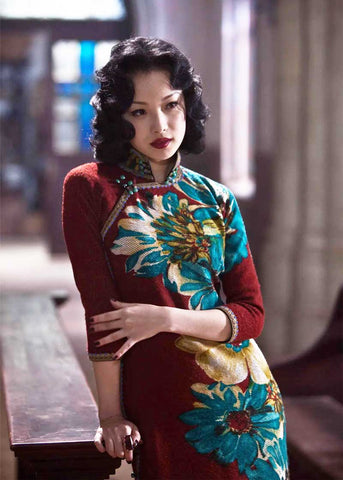
The cheongsam, developed in the early 20th century, became the most common women’s garment after the 1920s, and was recognized as one of the national dresses by the government of the Republic of China in 1929. After the 1950s, the cheongsam was gradually neglected, especially during the Cultural Revolution.
After the 1980s, with the renewed emphasis on traditional culture, as well as the influence of film and television culture, fashion shows, beauty pageants, and more, the cheongsam gradually regained popularity in China and spread throughout the world.
In 1984, the cheongsam was designated by the State Council as the dress for female diplomats.
Since the 1990 Beijing Asian Games, the cheongsam has been chosen as ceremonial attire for the Olympic Games, Asian Games, and international conferences and exhibitions held in China.
On May 23, 2011, handmade cheongsam craftsmanship became one of the third batches of national intangible cultural heritage approved by the State Council.
In November 2014, during the 22nd Asia-Pacific Economic Cooperation meeting held in Beijing, the Chinese government chose the cheongsam as attire for the wives of the leaders of the participating countries.